
Schwabe Remedy Times


Product
(empty)
A kidney stone is a solid mass made up of tiny crystals. One or more stones can be in the kidney or ureter at the same time. When a solution can no more dissolve a substance it is called saturation point. And when a solution contains more of the dissolved material than it can actually dissolve, it is called super-saturation. In healthy conditions enzyme system maintains balanced super-saturation which fails in disease condition where chemicals precipitate out in form of crystals.
Causes and factors
There are various causes behind the formation of renal stones of which dietary factor plays a vital role. Lifestyle changes, changing trends in food habits, low fluid intake, etc. increase the risk of developing renal stones. Certain other factors like physiological changes in the urine (eg. urinary pH, specific gravity, etc.), urinary tract infection, urinary stasis, hyperexcretion of urinary constituents such as oxalates, calcium, uric acid, cystine and conditions like hyperparathyroidism, hyperoxaluria, etc. are favourable conditions in the urinary system for the formation of urinary stones by a situation of super-saturation due to failure of in-built mechanism to prevent it.
Apart from the above, following factors may have influence.
Symptoms
A kidney stone may not cause symptoms until it moves or dislodges from the place of origin. Nature of pain may change time to time due to the current location and size of the stone. When the stone moves down from the kidney to ureter to bladder, different type of pain is felt. At times the intensity may come down if the stone is broken into pieces. At that point, followed signs and symptoms may be experienced.
Pain related symptoms
Symptoms related to nature of urine
Other associated symptoms
Effects of renal stone and the recurrence
The stones formed have different effects on both the kidneys. On the kidney in which the stone is formed, there could be obstruction of urinary outflow, infection, local ischemia and metaplasia. On the other kidney, there may be compensatory hypertrophy, and infection. Sometimes the stones may be bilateral with severe damage to the system. Even after the treatment, there is a greater chance of recurrence.
Prevention
Homoeopathic management
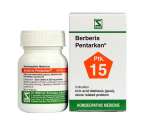
Homoeopaths normally manage such cases on the basis of type of pain, modalities, proneness to the formation of stone, etc. Usually homoeopaths prescribe drugs like Lycopodium (if the stone is on the left side), Calcarea carbonica (if the stone is on the right side), with other ancillary drugs like Belladonna, Berberis vulgaris Q, Cantharis Q, Ocimum canum Q, Sarsaparilla Q, Sepia, Urtica urens Q and others along with Berberis Pentarkan on long term basis.
Get remedy
Please consult your homoeopath.
Disclaimer: The information provided herein on request should not be taken as a replacement of medical advice or for the diagnosis or treatment of any medical condition.

2019-12-06
In the year 2018, Schwbae India has formed a Scientific Advisory Board with eminent physicians, researches & clinicians of the country. The Board meets annually for the scientific discussion and inputs to the organisation.
read more...
2019-11-27
Schwabe India has organised free medical camp at IITF. Approximately 800 patients visited for their health issues and benefited by advice from team of doctors appointed by Schwabe India.
read more...